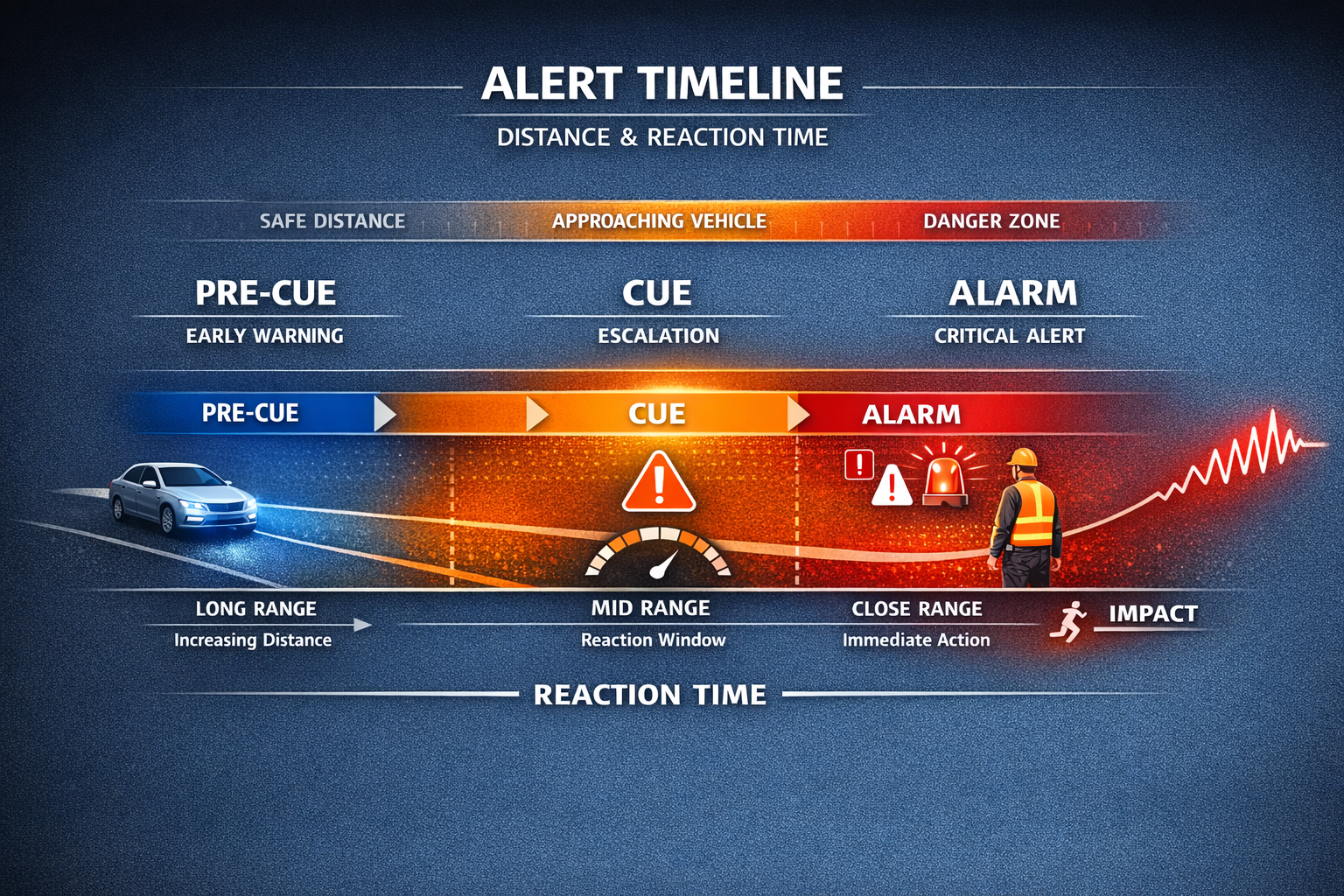
Workers get pre-cues before escalation to reduce surprise.
Virtual Instinct
Virtual Instinct is part of the RoadDefender Platform, built for edge-first safety in high-risk operations where speed, clarity, and trust are non-negotiable.
RoadDefender processes safety intelligence at the edge to deliver low-latency awareness across perimeter, work zone, and proximity risk.
Field-ready outcomes
-
-
Alerts are multi-sensory so they cut through noise and motion.
-
The sequence is consistent across devices so crews learn it quickly.
Key proof: Samsung wearable validation and live deployment references show how the RoadDefender Platform supports perimeter, work zone, and proximity protection in live operations.
How It Works
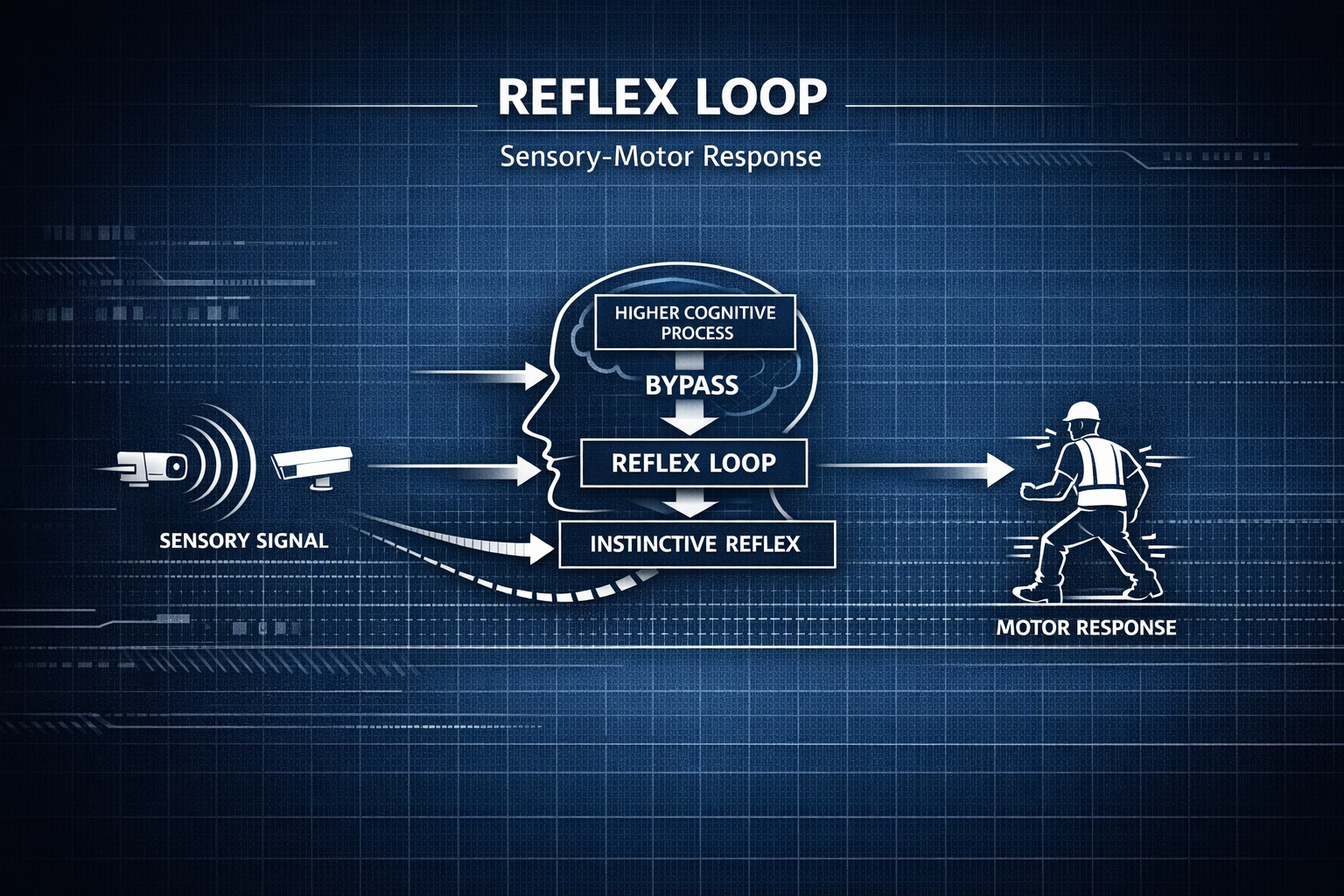
Virtual Instinct is built on a reflex‑loop model in the RoadDefender Platform—a continuous cycle of detect, alert, respond, and learn—designed to keep workers safe in real‑world hazardous conditions. By processing on-site first, RoadDefender reduces latency and keeps protection available even with limited connectivity.
In dangerous moments, the brain can freeze, hesitate, or scatter under pressure. Virtual Instinct is designed to work with this natural response—not against it—by converting risk into simple, time‑critical cues that turn instinct into purposeful action across perimeter, work zone, and inside-zone proximity scenarios.
View deeper reflex-loop detail
Through repetition, these cues train the wearer to link specific alerts with specific movements. Over time, response shifts from conscious thinking to automatic, practiced action—building reliable muscle memory that holds up under stress.
The result is safety feedback that feels natural in the moment and gets measurably more reliable over time. This is closed‑loop learning in practice: the system continuously refines its alerts based on how workers actually respond in the field.
THREE LAYERS OF PLATFORM COVERAGE
The RoadDefender Platform applies Virtual Instinct cues across perimeter coverage, work zone awareness, and inside-zone proximity protection so crews can recognize risk early, orient quickly, and respond decisively.
-
Edge Detection at the Perimeter
Detect and classify incoming traffic threats before they enter the active zone.
-
Live Work Zone Awareness
Share live safety context across crews, supervisors, and connected devices.
-
Inside-Zone Proximity Protection
Monitor worker–equipment interactions in real time to reduce close calls.
MULTI‑SENSORY CUES
Virtual Instinct combines multiple alert channels—vibration, visual, sound, and text—so critical information reaches workers even through noise, motion, limited visibility, and intense focus.
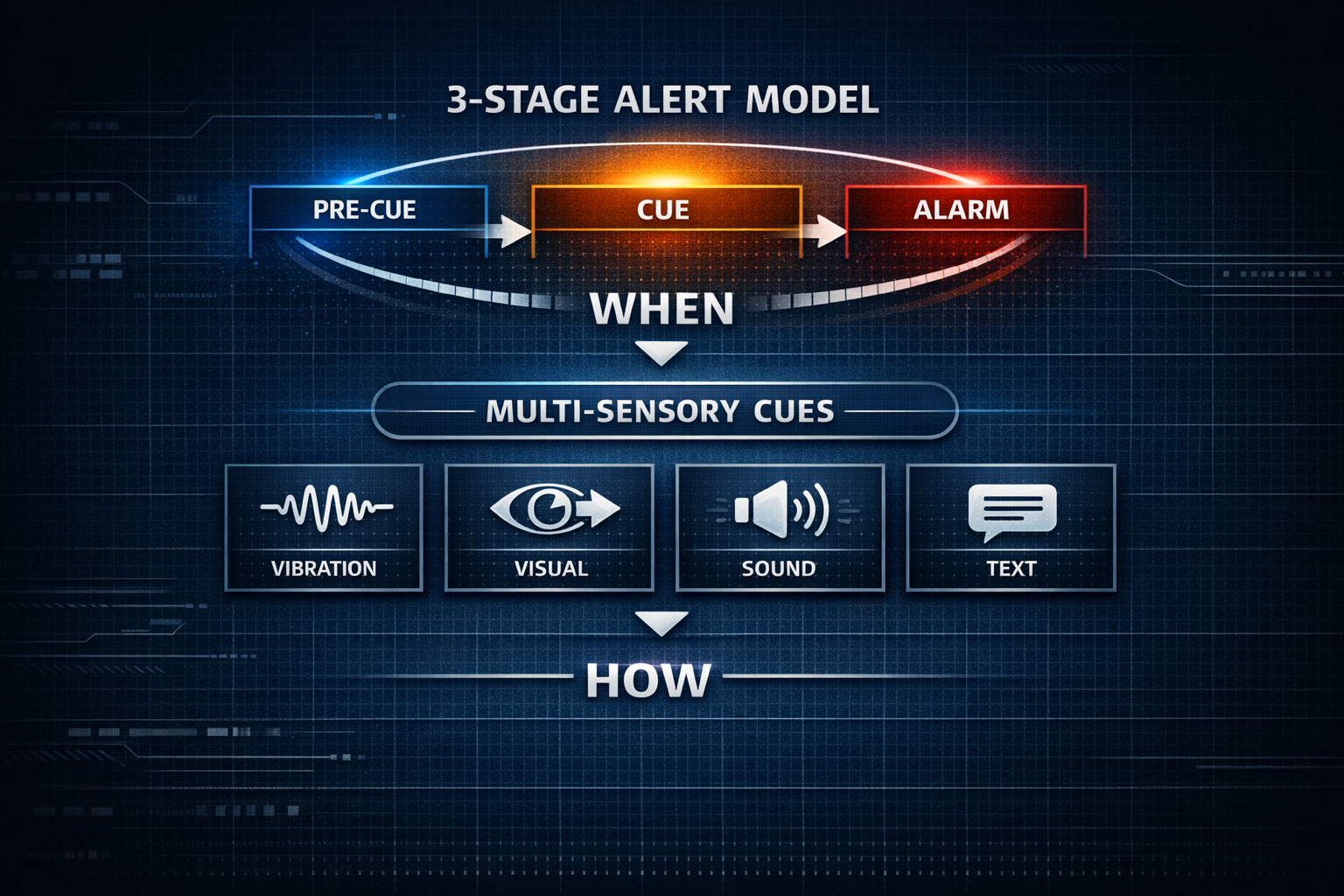
- Vibration Body-worn vibration alerts cut through noise and motion where other signals can't.
- Visual High-contrast prompts direct focus to the hazard.
- Sound Distinct escalation tones signal urgent action moments.
- Text Short action language confirms the next safe step.
Multi-Sensory Cues Diagram: using multiple alert channels at once means a worker is far less likely to miss a warning, even in the toughest field conditions.
Together, these channels create a progressive alert experience that is easier to trust, harder to miss, and faster to act on.
BENEFITS & VALIDATION
Virtual Instinct is validated in real operations as part of the RoadDefender Platform to deliver low-latency safety outcomes across perimeter, work zone, and proximity risk.
- Faster Hazard Recognition
- Improved Crew Coordination
- Reduced Operational Disruption
- Continuous improvement through the reflex‑loop feedback cycle—the system learns from every real‑world response to become more accurate over time
This methodology is grounded in human‑factors science—the study of how people perceive and respond under real working conditions—and is continuously refined based on how workers perform in the field.
See Edge-First Safety in Action
Request a quote to learn how the RoadDefender Platform applies Virtual Instinct across perimeter, work zone, and proximity risk in your operational environment.