How RoadDefender Works
How the RoadDefender Platform protects active work zones
RoadDefender processes safety intelligence at the edge to deliver low-latency awareness across perimeter, work zone, and proximity risk.
-
Edge Detection at the Perimeter
Detect and classify incoming traffic threats before they enter the active zone.
-
Live Work Zone Awareness
Share live safety context across crews, supervisors, and connected devices.
-
Inside-Zone Proximity Protection
Monitor worker–equipment interactions in real time to reduce close calls.
RoadDefender Platform flow
How the RoadDefender Platform works
Perimeter → Work Zone → Proximity
RoadDefender processes safety intelligence at the edge to deliver low-latency awareness across perimeter, work zone, and proximity risk.
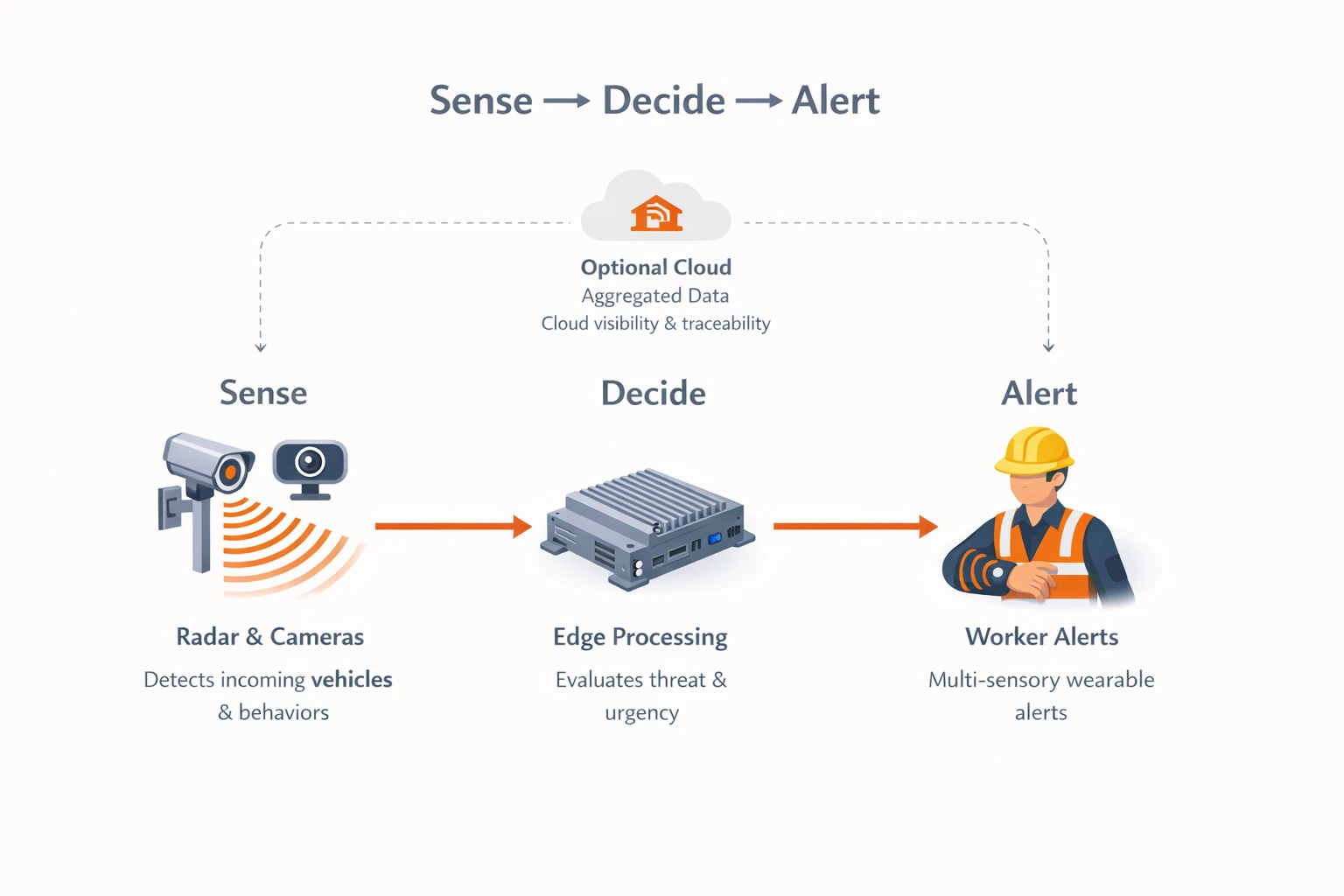
Sense
Radar monitors approaching vehicles and triggers perimeter alerts locally at the edge—the primary, field-deployed detection path. Camera-based sensing is in active field validation to add inside-zone context where supported.
Decide on-site (edge processing)
Critical decisions are made locally in real time. Edge logic evaluates intrusion risk and urgency without waiting on remote services.
Alert
When thresholds are crossed, workers receive immediate wearable worker alerts designed to cut through noise and visual distraction.
Optional cloud visibility
Aggregated events can sync to cloud for multi-site visibility and traceability. Cloud services are optional and never delay alert delivery.
Key takeaway: Alerts always follow Sense → Decide → Alert; cloud visibility is optional and never delays alerts.
Hardware & Deployment OptionsResponse reliability
Why Edge-first work zone safety matters
Built for time‑critical decision making
By processing on-site first, RoadDefender reduces latency and keeps protection available even with limited connectivity.
Faster Hazard Recognition
Perimeter and work zone signals are processed locally so crews get immediate awareness before risk enters active operations.
Improved Crew Coordination
Live context is shared across workers, supervisors, and connected devices without waiting on remote services.
Reduced Operational Disruption
Inside-zone proximity protection continues on-site in real time, helping reduce close calls and keep work moving in changing field conditions.
Key takeaway: The RoadDefender Platform keeps perimeter, work zone, and proximity protection active at the edge for low-latency response.
See Edge-First Safety in ActionRole-based delivery
Who Gets What: Outputs at Every Level
The RoadDefender Platform delivers role-based visibility across perimeter coverage, work zone awareness, and proximity protection.
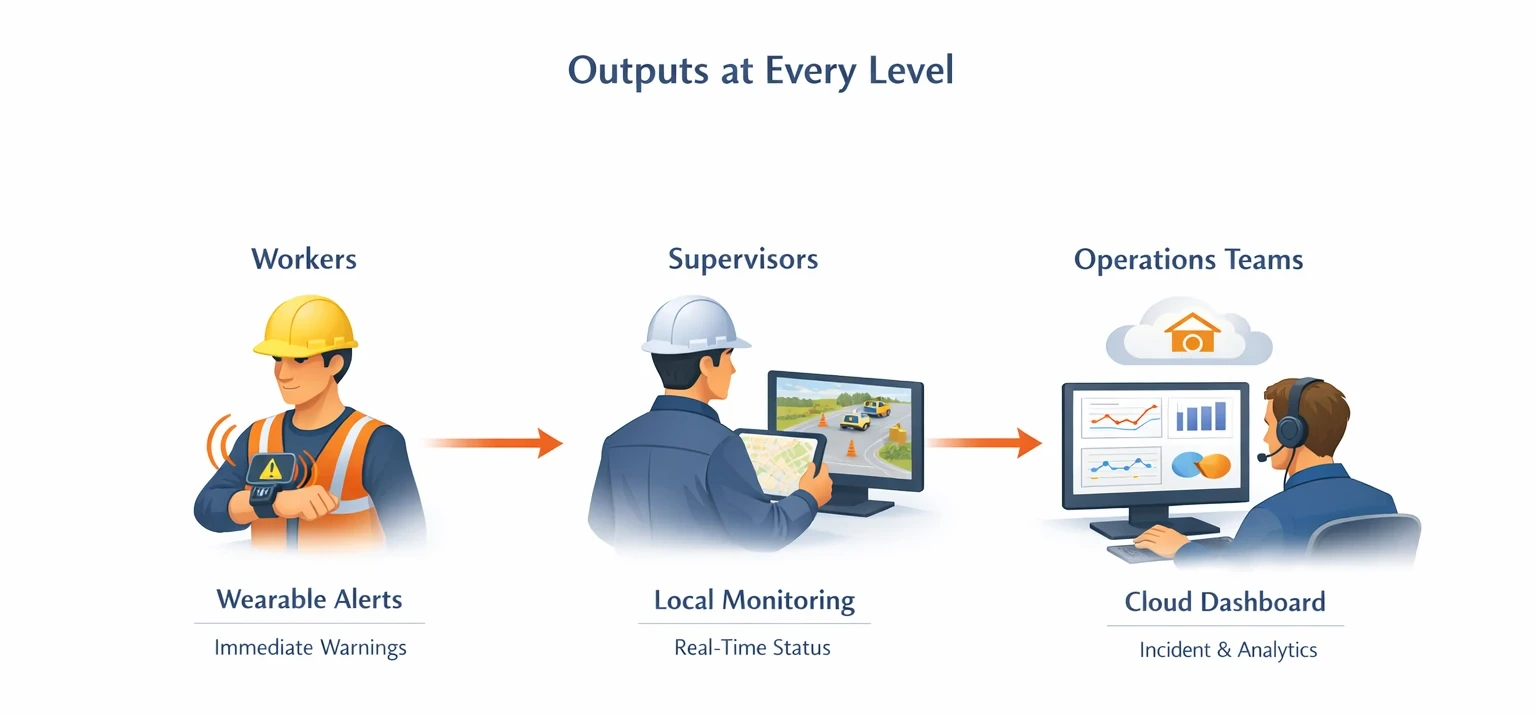
Workers — Immediate awareness
Outcome: Workers get direct, personal alerts the moment risk thresholds are crossed.
- Immediate multi‑sensory alerts on Samsung wearables.
- Direct individual alerting inside the active work zone.
- Local delivery path with no cloud dependency.
Supervisors — Local visibility
Outcome: Supervisors get live local context to make immediate work-zone decisions.
- Current site status and active alert visibility.
- Decision support to pause, adjust, or resume work quickly.
- Real-time view focused on what is happening now.
Operations teams — Optional program‑level visibility
Outcome: Operations teams get optional cross-site visibility for oversight and review.
- Optional cloud aggregation across crews and sites.
- Traceability for event review and program oversight.
- On-demand visibility rather than scheduled reporting.
Key takeaway: Workers, supervisors, and operations teams stay aligned on perimeter, work zone, and proximity risk from one edge-first platform.
Watch Field ValidationOperational visibility — on demand
From the RoadDefender Platform to a Live Safety Dashboard
The RoadDefender Platform issues perimeter, work zone, and proximity alerts locally first, while event data can optionally flow to the Safety Dashboard for operational visibility.
By processing on-site first, RoadDefender reduces latency and keeps protection available even with limited connectivity.
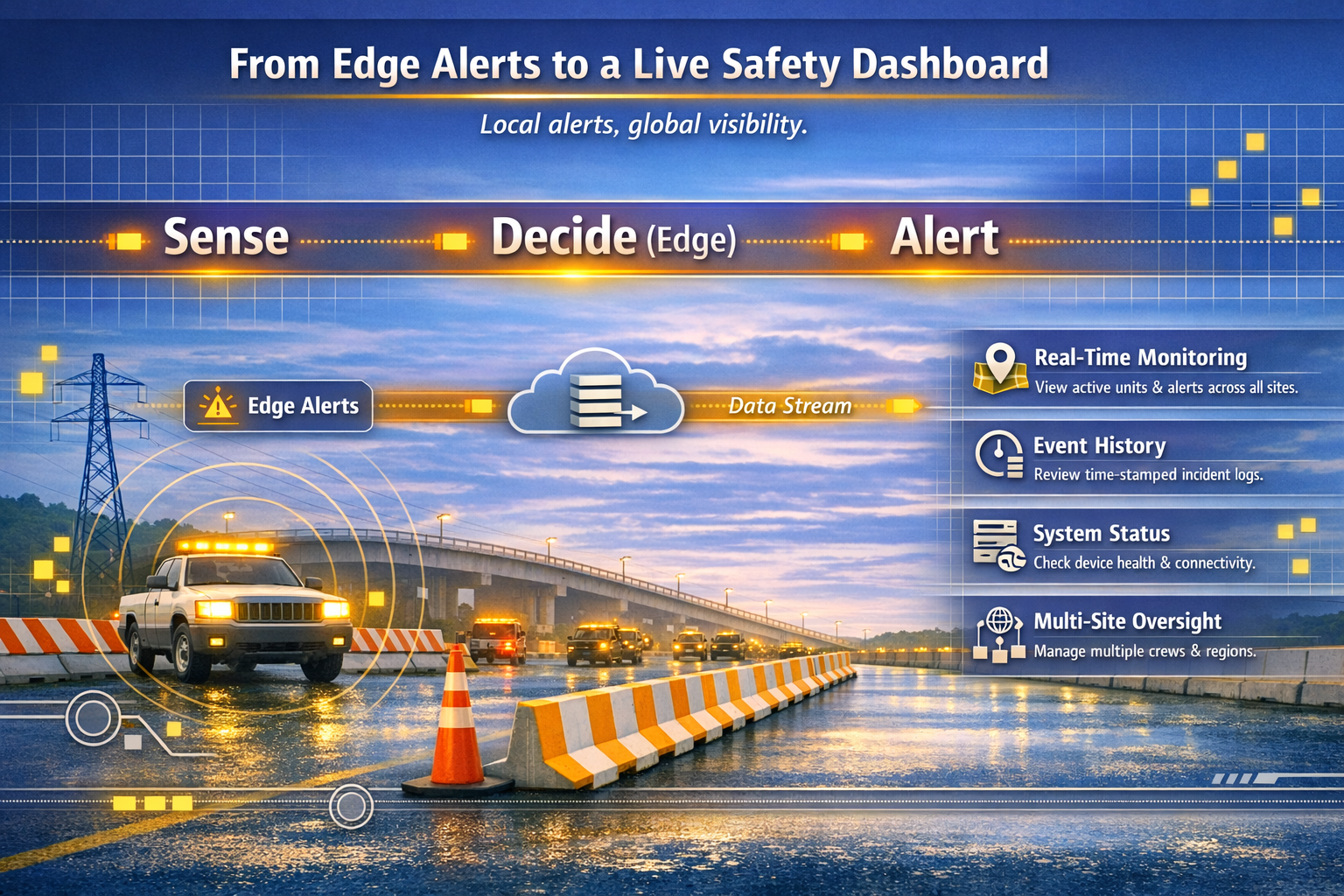
Edge units execute local alerts independently of dashboard connectivity. The dashboard provides centralized visibility into outcomes—not control over how alerts are issued.
What the Safety Dashboard Provides
Operational Activity View
- Live view of deployed units, active alerts, and recent events.
- Supports deployment decisions without affecting edge alert execution.
Event Traceability
- Structured, time‑stamped records of alerts and zone events.
- Supports post-incident review and operational accountability.
System Health Monitoring
- Unit-level connectivity and health status across deployments.
- Supports readiness planning without interfering with edge logic.
Program‑Level Capability
Multi‑Site Program Visibility
- Consolidated program view across multiple crews and sites.
- Fleet-level oversight while each unit keeps autonomous alerting.
Key takeaway: The Safety Dashboard is a visibility layer only; local edge alerting remains authoritative for time‑critical outputs.
Dashboard data reflects events as recorded at the edge. Visibility is available on demand; RoadDefender does not rely on scheduled or regulatory reporting.
Ready to See the Platform in Action?
Explore how edge-first perimeter, work zone, and proximity protection fits your project.
See Edge-First Safety in Action